 Stakely
Can You Be a Boglehead and Still Own Tech? Yes, and Index Funds Already Do
Investing Strategy·October 6, 2026
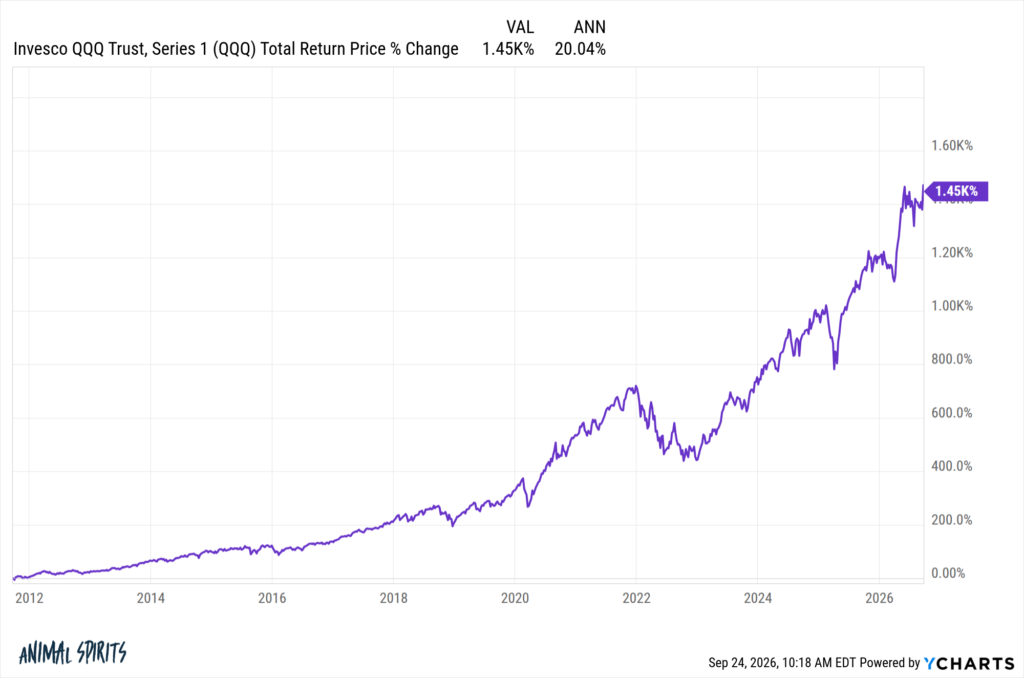
A common worry among passive investors goes like this: if the next great technology companies stay private longer, a plain index fund might leave them out of the biggest gains. It is a fair question for anyone who follows the Boglehead approach of buying broad, low-cost funds and holding them.
The short answer from A Wealth of Common Sense is that public market investors do not need to chase private market stocks to own the tech story. A total market fund already holds the giants that dominate the sector, and those companies have supplied a huge share of stock market returns over the past decade or more.
Consider how the market works. Today's technology leaders were once startups, and many went public and kept compounding in public view. Investors who bought a broad index were along for the ride as those firms grew into the largest positions in the portfolio. The index does not need to predict winners in advance. It simply gives more weight to the companies that grow, and trims those that fade.
That is the core of the Boglehead logic. Nobody has to pick the next big name. Owning everything means owning the winners by default, without having to identify them early.
Private markets look different once you examine them closely. Early returns from a successful startup often go to venture funds, founders and insiders long before an ordinary investor can buy in. By the time a company lists publicly, much of the steepest growth may already be behind it. Access for individuals is also limited, and where it exists it often comes with high fees, lockups, limited disclosure and valuations that are hard to verify.
There is a survivorship problem as well. The famous private success stories are easy to remember, but they sit alongside a long list of ventures that returned little or nothing. Looking only at the winners can make private investing seem easier and more lucrative than it is for the typical participant.
None of this means tech is a bad bet or that private investing has no place. It means the average public market investor is not at a disadvantage simply for staying in listed stocks. Broad funds already carry heavy tech exposure, and in cap-weighted indexes it can be a very large slice of the whole.
That concentration is worth noting in its own right. An investor who wants less tech risk, not more, may find that a standard index already leans further into the sector than expected. Adding extra tech funds or private vehicles on top could compound that tilt rather than diversify it.
The practical takeaway is simple. If you are a Boglehead, you can keep your discipline: low costs, wide diversification and a long time horizon. The fear of missing out on private tech is understandable, but for most investors it is a distraction from a strategy that already captures much of what the sector delivers.
Reporting based on an external source.