 Stakely
How One Investor Thinks About Adding Bonds
Fixed Income·October 22, 2026
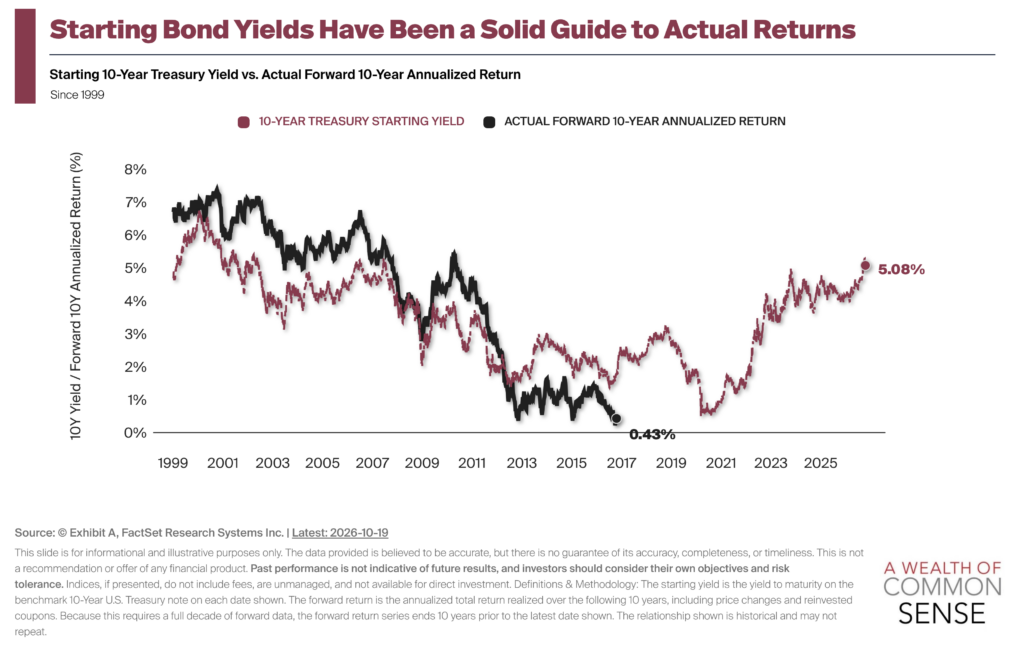
Ben Carlson, the investment writer behind the blog A Wealth of Common Sense, has published a post titled "How I Think About Investing in Bonds." The post's summary is brief. Carlson says he bought some bonds, and the rest of the article is not included in the source material, so this piece does not cover his specific holdings, allocation or reasoning. Readers who want those details should go to the original post.
The title still points to a question many individual investors face: why add bonds to a portfolio that is mostly stocks? A bond is a loan to a government or a company. In return, the borrower pays interest and repays the principal at maturity. Investors often hold bonds for steadier income and smaller price swings than stocks, and high-quality bonds have historically tended to hold up better than equities during market sell-offs.
Bonds carry their own risks. Their prices move in the opposite direction of interest rates, so when rates rise, existing bonds with lower yields become less attractive and lose value on the open market. Longer-maturity bonds are generally more sensitive to rate changes than short-term ones. Credit risk matters too, since a borrower can default, and lower-rated issuers usually pay more to compensate for that risk.
For anyone weighing a similar move, the basic questions are the ones that apply to any investment: how long the money can stay invested, whether the goal is income or stability, and how much of the portfolio should sit in fixed income relative to stocks. Answers vary from person to person, so a bond allocation that suits one investor may not suit another.
Reporting based on an external source.