 Stakely
Time to Rebalance? How to Tell When Your Portfolio Needs a Reset
Portfolio Strategy·October 16, 2026
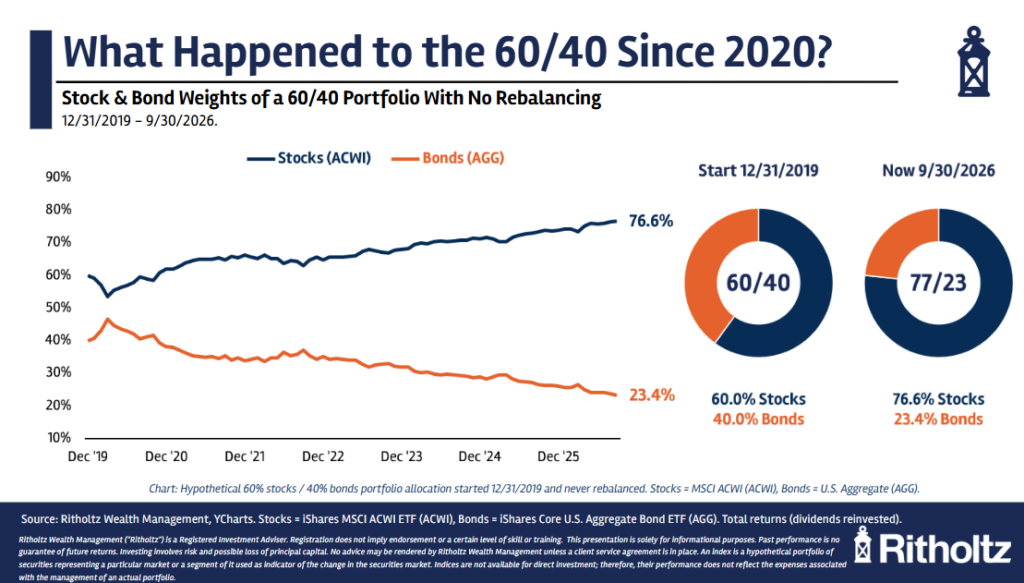
A portfolio that was balanced when it was built rarely stays that way. When stocks rally, they can grow to take up a bigger share of the total than the investor planned, while bonds or cash may lag behind. Over time, that drift changes the amount of risk the portfolio carries, which is why the real question is not whether the mix has changed but whether it has changed enough to matter.
Two common approaches guide the decision. A calendar-based investor reviews holdings on a fixed schedule, often once or twice a year, and resets the weights to target. A threshold-based investor waits for an asset class to move a set distance from its goal, such as five percentage points, before acting. Many investors combine the two, checking on a schedule but only trading when the drift is large enough to justify it.
Rebalancing has trade-offs. Selling assets that have risen and buying those that have fallen runs against the instinct to chase performance, and that discipline is much of its value. It can also trigger capital gains in taxable accounts and bring trading costs. Investors can soften those effects by directing new contributions toward underweight holdings, rebalancing inside tax-advantaged accounts first, or relying on funds that rebalance automatically.
Before making any trades, it helps to revisit the original plan. A change in income, time horizon, or tolerance for losses may matter more than recent market movement. Rebalancing is less about forecasting what comes next and more about keeping a portfolio aligned with the strategy its owner chose. For most investors, it is a routine check rather than an urgent decision.
Reporting based on an external source.