 Stakely
The 15-Year Question: When Stock Returns Fall Short
Markets·October 21, 2026
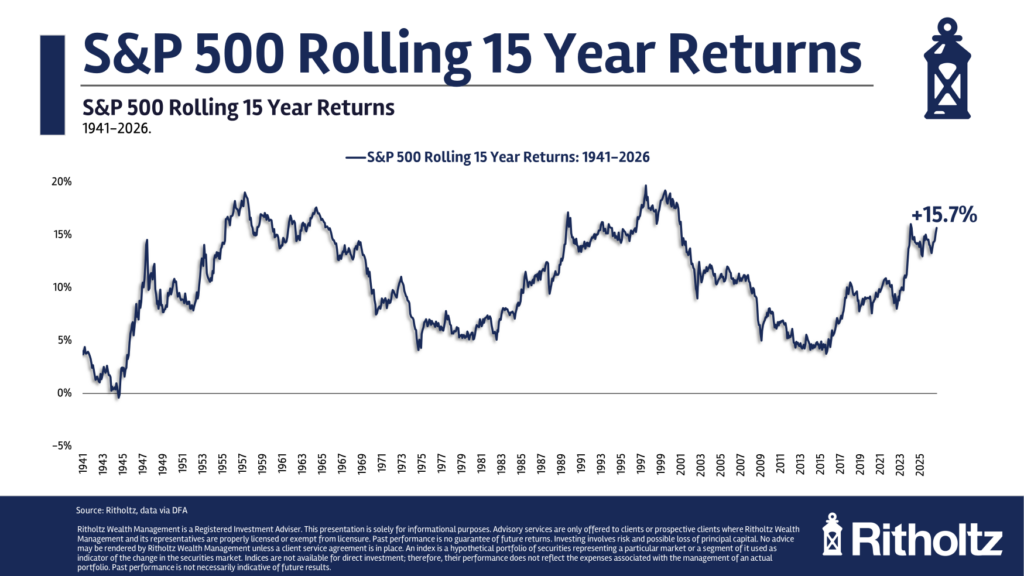
Investors who expect the stock market to deliver steady gains every year may need a longer lens. Over 15-year stretches, returns can land well below the long-term averages people often quote, and the starting point frequently explains much of the gap.
The biggest driver is valuation. When stock prices are high relative to the earnings, dividends, and other fundamentals that companies produce, future returns have historically tended to be more modest. Buying at a premium leaves less room for prices to grow faster than the businesses behind them. When valuations are low, the pattern has often reversed, and patient investors have frequently been rewarded over a decade or more.
Other forces shape the result as well. Inflation erodes the real value of gains, interest rates influence how much investors will pay for future profits, and economic growth determines how much companies can expand their earnings. Dividends matter too. Reinvested income has accounted for a meaningful share of total returns over long periods, so ignoring it can paint a far less accurate picture.
What does this mean in practice? A long-run average is not a guarantee. Someone who needs money in a specific year can face a poor stretch no matter what history suggests. Planning around a range of possible outcomes, rather than a single expected return, tends to hold up better. Spreading money across asset classes, keeping fees low, and matching stock exposure to the time horizon remain the standard tools.
The takeaway is simple. Lower returns are a real possibility over any given 15-year window, and today's valuations are one of the clearest clues investors can watch.
Reporting based on an external source.